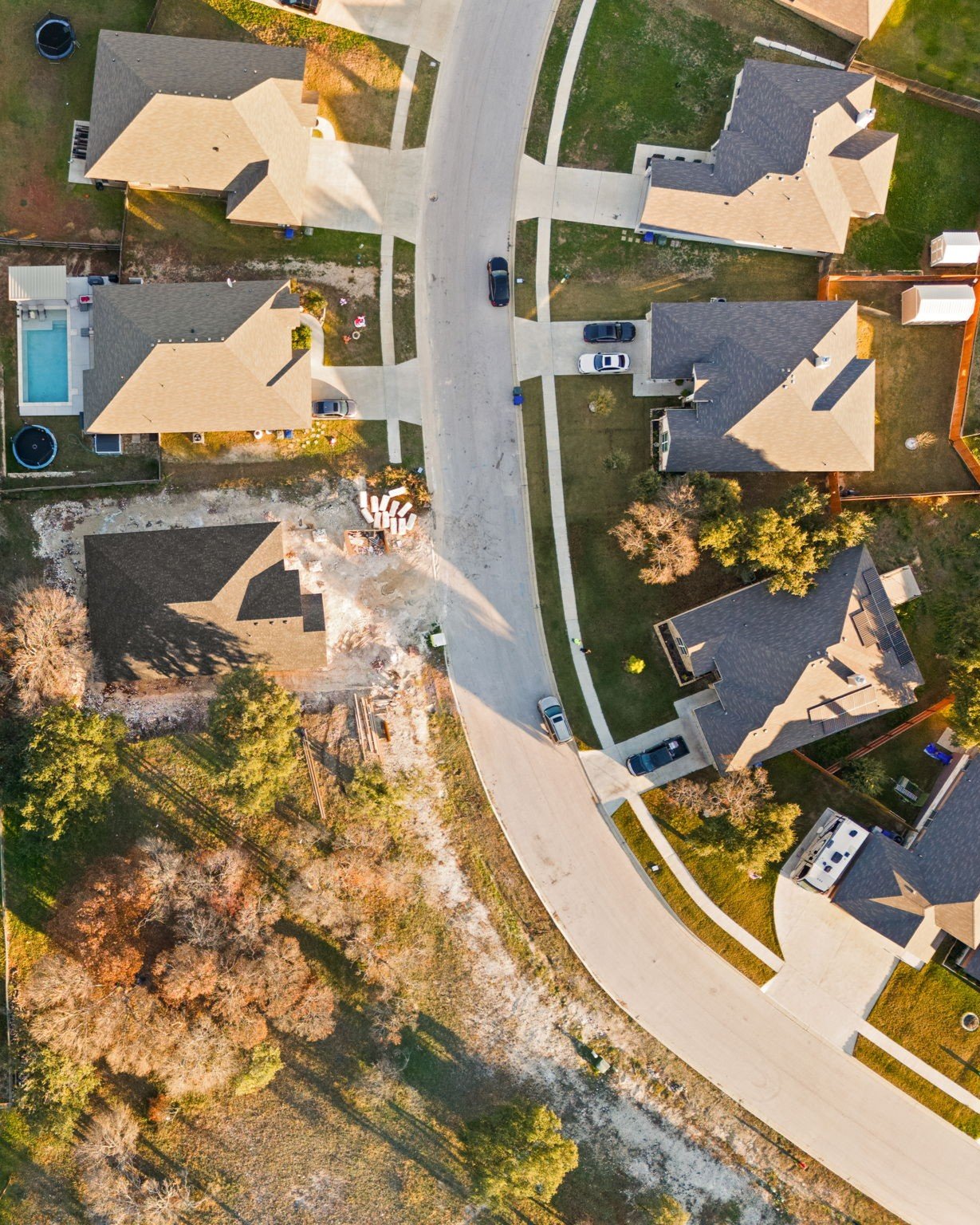
A family with orders to Fort Cavazos does the math the way most people do it. Brand new house. Fresh slab, fresh lumber, fresh everything. No previous owner, no decades of moisture creeping into a crawlspace, no reason to think a pest inspection applies to them at all.
Then their loan officer asks for a form they've never heard of, and the closing date they built their whole PCS timeline around starts to wobble.
Texas is one of roughly 32 states where the VA requires a wood-destroying insect inspection on every purchase loan, and that requirement applies statewide across all 254 counties, new construction included. It is not something an appraiser decides to flag if the house looks suspicious. It is baked into the file before the VA will issue a Notice of Value at all. Bell County is no exception, and neither is a house that closed framing three weeks ago.
Why "Brand New" Doesn't Exempt the House
The VA sorts the country into termite infestation probability zones, and Texas sits in the moderate to heavy category alongside places like Florida, Georgia and Louisiana. That classification is about soil and climate, not the age of the structure sitting on top of it. A slab poured in July 2026 rests on the same ground that's supported termite colonies for generations. New lumber is still lumber.
That is why the VA's own local requirements page lists Texas among the states where wood-destroying insect information is required for the entire state, full stop, unless the specific loan type is exempt. Streamline refinances skip it. Purchase loans do not.
The Paperwork Gap Most Buyers Never See
Here's the part that trips people up on new builds specifically. A resale home gets one clean document trail: an inspector shows up, checks the structure, and files an NPMA-33 report showing no active infestation. Done.
New construction runs on a different set of forms, and the builder's pretreatment alone does not satisfy any of them. Soil treatment before the slab pour is smart building practice. It is also not a certified guarantee that a VA underwriter can put in a loan file.
What actually clears the requirement on a new build is a pair of HUD forms working together. The builder completes HUD-NPMA-99-A, a guarantee stating that a licensed pest control company treated the property according to code, or that pressure-treated lumber was used as the sole prevention method in the rare cases where that's compliant. That guarantee runs for one year from the closing date, according to the form's own language. The licensed pest control company that did the actual work files HUD-NPMA-99-B, describing exactly which method was used, whether it was a soil-applied termiticide, a bait system, or a physical barrier.
Neither form alone is enough. The 99-A needs the 99-B attached to mean anything to a lender. If a builder hands a buyer a certificate of pretreatment and nothing else, that's a start, not a finished file.
| Resale home | New construction | |
|---|---|---|
| Who inspects | Independent WDI inspector | Same, but paperwork routes through the builder |
| What clears the loan | NPMA-33 report | HUD-NPMA-99-A guarantee plus HUD-NPMA-99-B service record |
| Does pretreatment alone count | Not applicable | No. Pretreatment without the paired forms is preventive pest control, not a loan-file document |
| Typical validity | About 90 days | Same window, but tied to a closing date that can still be moving |
The 90-Day Clock Nobody Mentions During a PCS
A VA termite report is generally treated as current for about 90 days. On a resale purchase with a firm closing date, that window rarely matters. On new construction near Fort Cavazos, where a buyer might sign a build contract months before a slab is even poured, that clock can quietly expire before the house is finished.
Families PCSing into the area are often working backward from a report date, coordinating a full VA purchase that typically runs 30 to 60 days from contract to close once preapproval is done, with the VA appraisal itself commonly taking 7 to 21 business days depending on appraiser availability. Add a construction schedule that shifts by a few weeks for weather or material delays, and a termite report ordered too early can go stale before the underwriter ever sees it. Order it too late, and it can hold up funding during the exact week a family needs to be moving in.
The fix is not complicated. It just requires someone tracking the construction calendar and the loan calendar at the same time, and ordering the inspection close enough to the real closing date that it doesn't need to be redone.
Who Pays, and Why That Changed
Until June 15, 2022, VA rules generally prohibited veterans from paying for their own termite inspection, which meant sellers had to agree to cover it or the deal stalled. VA Circular 26-22-11 changed that, allowing the veteran borrower to pay the fee directly in any state where the inspection is required.
That flexibility matters more on new construction than it did before. There is no traditional seller to negotiate with the way there is on a resale. The cost, typically in the range of $75 to $200 depending on the inspector and property, becomes a line item the buyer and builder work out directly, usually spelled out in the build contract rather than negotiated after an offer.
What This Looks Like in Bell County Right Now
None of this happens in a vacuum. As of 2026, the VA loan limit for Bell County sits at $832,750, which covers the overwhelming majority of new construction and move-up purchases in the Fort Cavazos area without requiring a down payment on the base loan amount. BAH for an E-5 with dependents at Fort Cavazos runs $2,733 a month in 2026, up 5 percent from the year before, which is the number most lenders are weighing against a proposed payment when they underwrite a purchase tied to incoming orders.
Conditions across the broader Killeen-Temple metro have loosened in 2026 compared with the slower stretches of the prior winter, giving families more room to plan a build around a report date instead of racing a bidding war. That extra breathing room makes it even less excusable for a termite paperwork gap, and not market pressure, to be the reason a closing slips.
Where a Builder-Broker Actually Earns Its Keep
This is the exact seam where being both a builder and a licensed real estate team pays off for a buyer. A pure buyer's agent can tell a client the VA requires the inspection. A pure builder can hand over a pretreatment certificate and move on. Neither one, on their own, is necessarily tracking whether the 99-A and 99-B are both filed, signed, and dated close enough to a real closing date to survive the 90-day window.
At Wayfinder Builders, that coordination is the job, not an afterthought. J.R. and Courtney Meza built the company around the idea that a veteran family shouldn't have to translate between a construction schedule and a loan file by themselves. Courtney's background is specifically in new construction and VA and veteran buyers, which means the termite paperwork question gets asked early, on purpose, instead of showing up as a surprise the week a family expected to get keys.
A Few Questions We Hear About This
Does this apply if I'm buying resale instead of new construction near Fort Cavazos? Yes. The state-level requirement is the same either way. Resale just uses the single NPMA-33 report instead of the paired builder guarantee forms.
What if my build gets delayed and the report expires before closing? The inspection generally needs to be refreshed if the original report ages past the roughly 90-day window your lender is working from. It's a short re-inspection, not a redo of the whole process, but it needs to be scheduled with enough lead time that it doesn't become the reason a closing slips.
Can I skip this if the builder already treated the soil? No. Soil treatment is a construction practice. The loan file needs the completed HUD-NPMA-99-A and, when applicable, the attached HUD-NPMA-99-B from the licensed pest control company. Pretreatment alone doesn't satisfy either form.
Who typically pays for the inspection on a new build? Since the 2022 rule change, veteran buyers can pay for it themselves if they choose to. On new construction, the cost is usually addressed directly in the build contract rather than negotiated after the fact the way it might be on a resale.
If you're timing a build or a purchase around orders to Fort Cavazos and want someone tracking both the construction calendar and the loan calendar at the same time, Wayfinder Builders is built for exactly that conversation. Start Your Dream Build.